 Best Coast played Brussels on Sunday night where they delivered an unexpected gem. "We'll play a Nirvana cover now. Feel free to film it," declared singer Bethany Cosentino before launching into "About a Girl." Film it someone did, of course, and now the world can see Bobb Bruno shredding to some vintage grunge revisited, via Pigeons and Planes.
The cover was a few days early — and culled from the wrong Nirvana album — to have been a deliberate tribute to Nevermind, which turns 21 today, but that's one reason why we're posting it now. (We could trot it out again in exactly one month: the version of "About a Girl" the band made famous on 1994's MTV Unplugged celebrates its 18th birthday on October 24; the original, of course, appeared on 1989's Bleach.) The song's hooky fuzz seems to fit the So Cal surf-poppers' dirty fizz just about perfectly. Assuming Green Day's arena tour is still on, Best Coast will be covering a lot of ground come January.
Best Coast played Brussels on Sunday night where they delivered an unexpected gem. "We'll play a Nirvana cover now. Feel free to film it," declared singer Bethany Cosentino before launching into "About a Girl." Film it someone did, of course, and now the world can see Bobb Bruno shredding to some vintage grunge revisited, via Pigeons and Planes.
The cover was a few days early — and culled from the wrong Nirvana album — to have been a deliberate tribute to Nevermind, which turns 21 today, but that's one reason why we're posting it now. (We could trot it out again in exactly one month: the version of "About a Girl" the band made famous on 1994's MTV Unplugged celebrates its 18th birthday on October 24; the original, of course, appeared on 1989's Bleach.) The song's hooky fuzz seems to fit the So Cal surf-poppers' dirty fizz just about perfectly. Assuming Green Day's arena tour is still on, Best Coast will be covering a lot of ground come January.
Mostrar mensagens com a etiqueta nirvana. Mostrar todas as mensagens
Mostrar mensagens com a etiqueta nirvana. Mostrar todas as mensagens
quinta-feira, 27 de setembro de 2012
Best Coast Cover Nirvana's 'About a Girl' as 'Nevermind' Turns 21
Best Coast played Brussels on Sunday night where they delivered an unexpected gem. "We'll play a Nirvana cover now. Feel free to film it," declared singer Bethany Cosentino before launching into "About a Girl." Film it someone did, of course, and now the world can see Bobb Bruno shredding to some vintage grunge revisited, via Pigeons and Planes.
The cover was a few days early — and culled from the wrong Nirvana album — to have been a deliberate tribute to Nevermind, which turns 21 today, but that's one reason why we're posting it now. (We could trot it out again in exactly one month: the version of "About a Girl" the band made famous on 1994's MTV Unplugged celebrates its 18th birthday on October 24; the original, of course, appeared on 1989's Bleach.) The song's hooky fuzz seems to fit the So Cal surf-poppers' dirty fizz just about perfectly. Assuming Green Day's arena tour is still on, Best Coast will be covering a lot of ground come January.

domingo, 25 de setembro de 2011
Passados 20 anos

Vinte anos depois de ter marcado uma geração e de ter dado visibilidade a «uma nova interpretação do que é o rock», o álbumNevermind, do grupo norte-americano Nirvana, volta a ser editado numa versão de luxo.
Para assinalar a efeméride, na próxima semana são lançadas em todo o mundo quatro edições remasterizadas deste álbum dos Nirvana, editado a 24 de Setembro de 1991.
Além das 12 canções, como Come as you are e Smells like teen spirit, a reedição inclui faixas inéditas, raridades, gravações ao vivo e um DVD com um concerto inédito.
Nevermind, segundo disco dos Nirvana, que apresenta na capa um bebé numa piscina a olhar para uma nota de dólar, vendeu mais de 30 milhões de cópias nestes vinte anos.
O álbum foi produzido por Butch Vig e interpretado por Kurt Cobain (vocalista e guitarrista), Krist Novoselic (baixista) e Dave Grohl (baterista, hoje líder dos Foo Fighters).
Kurt Cobain morreria três anos depois, aos 27 anos.
Hoje, vinte anos passados e depois de muitas bandas rock terem surgido influenciadas pelos Nirvana, o baixista do trio de Seattle, Krist Novoselic, que ajudou a organizar esta reedição de luxo, vai juntar-se na terça-feira a músicos daquela cidade para tocar ao vivo o álbum.
No concerto, além de Novoselic, irão actuar também os Fastbacks, Long Winters, Vaporland, Visqueen, Campfire OK, Valis (de que fazem parte membros dos Screaming Trees) e Ravenna Woods, entre outros.
Em entrevista à revista Billboard, Krist Novoselic disse que em 1991Nevermind foi editado «no lugar certo, no momento certo. Foi o disco certo».
«Deu cabo daquilo que se chamava 'música alternativa', que é um rótulo que nunca gostei. Mesmo 'grunge' é melhor do que 'música alternativa'. Não havia alternativa. Era uma nova onda do rock. Era uma nova interpretação e estilo da música rock», disse.
Em 2005, o álbum passou a fazer parte oficialmente dos registos fonográficos dos Estados Unidos a preservar, pela importância «cultural, histórica e estética» para as gravações do século XX.
Lsua/SOL
domingo, 18 de setembro de 2011
In search of Nirvana
Twenty years ago an album that wreaked havoc on the conventional music industry was released. Lauren Spencer, who was among the first to hear Nevermind, reminisces with the surviving band members, and returns to Seattle to hear how Kurt Cobain changed music for ever
Lauren Spencer
The Observer, Sunday 18 September 2011
Nirvana live at the Paramount in Seattle in 1991
Twenty years ago on a hot, smelly mess of an August day, the kind New York City does so well, I crossed the lobby of a swanky hotel in Manhattan to interview a band. They were in town to promote their first major-label release, Nevermind, and because I worked for Spinmagazine, I'd been sent an advance of the music. It had caused me to miss my stop on the subway so confused and smitten was I by the soft and hard edges of the tunes and lyrics coming through my headphones. So I was heading up to meet these guys who called themselves Nirvanaand find out for myself how they put heaven and hell into each of the songs.
When I stepped into their closet-sized room – twin beds, one chair, one table – I was met by Kurt Cobain, singer- songwriter, guitarist, and David Grohl, the man of drums. Bassist Krist Novoselic had a prior engagement and was not able to join us. That they looked not so much like up-and-coming rock stars as kids whose parents had left them to their own devices – and whose activities may have included bouncing on the beds and making prank phone calls – was heartening, as I was thoroughly sick of the slick interviews I'd been encountering with top-40 rock outfits. Our conversation encompassed homemade tattoos and why Cobain chose the K symbol for his, representing the Washington indie label of the same consonant; that night's free-for-the-fans Metallica party at Madison Square Gardens that they were eager to get into; and how much they loved the trailblazing Sonic Youth.
The fact that within the next few years Nirvana would pave the way for Sonic Youth and other like-minded alternative groups to find a larger audience, as Nevermind toppled pop giant Michael Jackson from his number one spot on the US Billboard charts, was impossible to forecast from this early 90s vantage point, where Bryan Adams's "(Everything I Do) I Do It For You" had been dominating both British and American airwaves for weeks. There was something in this Seattle-based band's songs, live performance and attitude that quickly set the rock 'n' roll industry on its ear, so that what had once been considered an underground sound would emerge to wreak havoc on conventional record chart rankings and traditional music business models.
When I left to go on holiday to Greece the next week, I took Nirvana's music with me. The band imprinted my vacation with incongruities: the clear blue beauty of the Aegean sea and the fuzz-fest mayhem of "Territorial Pissings", a hot shimmering Mediterranean sun infected with the chilling strains of "Polly". It all clashed so beautifully that it woke me up from the Guns N'Roses/Mötley Crüe-like torpor I'd been sunk into of late.
I certainly wasn't alone in responding to that call, as I witnessed on 24 September 1991, the day of Nevermind's release, when I went to Boston to see Nirvana live for the first time. The show was at a club called the Axis, which was apt, since the earth really did seem to shift during their performance. The energy was palpable from the first notes of their cover of the Vaselines's "Jesus Doesn't Want Me for a Sunbeam" and through to their own single "Dive". The notes screamed and bounced off the walls, sweat flew from onstage and off, all combined with incredible melodies while hundreds of kids shook the foundation of the building in their abandon.
There was a sense that the wall separating so-called mainstream music from what was real and raw was being pounded into rubble in front of our eyes by Nirvana's aural celebration and rage. That it all blew completely apart three short years later on 5 April 1994 when Cobain put a shotgun to his head was both inconceivable and, strangely, almost inconsequential, because though both his life and the band came to a tragic and much-too-early end with that trigger pull, Nirvana's legacy had lodged deeply in the public's consciousness and changed music for ever.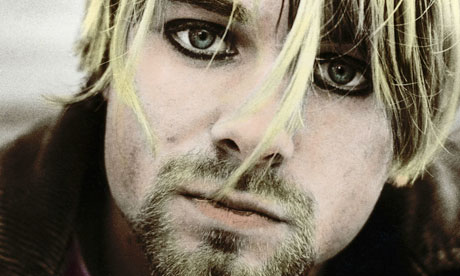
In between Nevermind's release and Cobain's death, a diverse and voracious stream of fans and sycophants turned up in Seattle looking for all things grunge, a word that had been given new purpose by the record and fashion industries. They used it to fold into one saleable mass all the varied sounds and stylings of the myriad Pacific Northwest bands, removing it from its original meaning as the stuff that gets underneath your fingernails. No matter what a band's sound, if they came from Seattle, they were categorised as grunge. The term was supposed to describe the lo-fi rumblings and sonic churn of bands such as the Melvins, one of the original groups on the scene that Nirvana admired, yet for every Melvins there was a Posies, a pop outfit whose clear and crystal melodies were anything but muddy. Bassist Dave Fox remembers that when he was on tour with the Posies, "We were always The Posies From the Town of Grunge, but we were so far removed from that scene."
Another of Seattle's nicknames was even more telling. Emerald City was meant to reference the area's surrounding evergreen forests, but it could also have described the tinge of record company currency that had begun to roll in, and the hue of innocence with which the city faced the oncoming masses. "I remember talking about how weird it was that all these [local] bands were getting signed to major labels," says Megan Jasper, vice president of Nirvana's first official label Sub Pop records, describing the aftermath of the 1991 release of Nevermind.
"Suddenly, the clubs didn't feel so empty," she says, "because people were coming in from other parts of the country since they'd heard something was going on here. You'd be walking to a club and someone would pull over and ask, 'How do you get to the Croc-o-dial café?' You'd think, 'Oh, fuck,' because that's where you were going and you didn't know who these people were."
Seattle rock photographer Lance Mercer remembers being amazed when he realised how the scope had changed. "I knew it when Pearl Jam opened for the Red Hot Chili Peppers and Nirvana at the Cow Palace in San Francisco [New Year's Eve, 1991] and I realised two things: one, there was something big going on that I hadn't really noticed; and two, I'd need a much larger lens to capture the action. I had no idea that other people knew Seattle existed. But suddenly I saw the music had all the elements for success. When I first heard 'Smells Like Teen Spirit' on the radio I said, 'Oh man, this is gonna be huge.'"
And the gospel of Nirvana was spreading fast, much more quickly than their record company figured – by using Sonic Youth as their guide they had substantially underestimated how many copies of Nevermind to release. It was clear that the industry would need a new template. Across the country, young people, or at least the young at heart, began to find a muse in their music. Whether Cobain liked it or not – and he frequently made it known how little he did – he was becoming the voice of a generation. Both Nirvana's music and their attitude were beginning to pierce the ultra-slick, airtight container that had up to now held 90s commercial music.
Cobain's often disturbing visual and melodic artistry, mixed with the band members' sense of humour, created a musical model vastly different from the carefully crafted careers the music industry usually constructed with the aid of marketers, stylists and managers. Nirvana were messy. They wore their own clothes and rolled around in their own musical mayhem, giving interviews that often bordered on the absurd, or at least un-checkable, as I found when my researcher attempted to confirm Kurt's last-known address as under a bridge in the logging town of Aberdeen, Washington.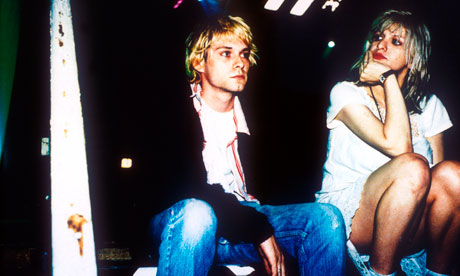 Kurt Cobain and Courtney Love, ‘who could start a war in an empty room’. Steve Pyke/Retna Photograph: Steve Pyke/Retna
Kurt Cobain and Courtney Love, ‘who could start a war in an empty room’. Steve Pyke/Retna Photograph: Steve Pyke/RetnaTroy Nelson, singer-songwriter, guitarist for Seattle band the Young Evils and DJ at KEXP radio, was a metal-loving teenager in South Dakota when he first encountered Nirvana's music. He couldn't quite make sense of why the band affected him the way it did. "I have a vivid memory of watching MTV and 'Smells Like Teen Spirit' came on," he says. "I was trying to piece together what the hell I was watching. I was completely struck by Cobain's style. They seemed like the stoners next door… like total dorks. But when you're 15 or 16 it felt like they were your friends and they were wreaking havoc. To me Kurt Cobain was the Wizard of Oz. He unveiled the phoniness of so many things. It actually kind of ruined a lot of music for me. But I loved it."
The songs were powerhouses for sure, but the whole package is what counted. "Bands come in and say I want my drums to sound like Dave Grohl's," says producer Butch Vig, who was responsible for the sound of Nevermind. "No matter what I do to this drum kit it's not going to sound like him unless he's the one playing. Maybe that's why there aren't any Nirvana tribute bands – I mean the songs are simple to play, but to pull off their attitude and talent would be hard. It would be easier to pull off a Journey tribute band."
Twenty years almost to the day from when I first entered that New York City hotel on my journey to find Nirvana, I'm standing in another lobby across the country. It's been over a decade and a half since Cobain killed himself and the surviving band members moved on to other projects: Grohl formed the Foo Fighters, Novoselic played bass in the bands Sweet 75, Eyes Adrift and Flipper, and began the non-profit organisation Joint Artists & Music Promotions Political Action Committee. My journey has brought me back to the OK Hotel, a former all-ages club where Nirvana first played "Smells Like Teen Spirit" to a passionate crowd on 8 April 1991. I'm desperate to find something that may smack of the teen spirit that in the early 90s propelled the band into the wider world of music with their raw power, fuck y'all attitude and pop-meets-punk tunes.
But I'm coming up short. I can't find one whiff of the delirious disorder and abandon I used to inhale back in the days when I'd fly out to cover the Seattle scene. There's no sound of music – not even any speakers to pipe it through – no smell of sweat from bodies moving en masse in a too-tiny room. Though the place is practically empty, I'm rooted in the same spot where I'd watched Nirvana, the Fastbacks, Mudhoney and Tad while losing my voice and having my feet stomped on. And now, many years later with Cobain dead and the scene moved on, I find myself instead having an altogether civil and well-modulated conversation about square feet. Because the OK Hotel is now a residential building offering apartments and artist suites, with a gallery planted where the stage and bar used to be.
But there's a perverse sense in this scenario – in light of what transpired, both in Seattle and beyond, in the three years between Nevermind's release and the decorating of the Cobain memorial bench in Viretta Park near the house where he ended his life. Cobain's suicide mummified the band, encasing Nirvana in a layer of nostalgia and removing them from active duty as the agents of change in an industry that seemed to be just opening up to the idea that all shapes and sizes could rock mainstream music. What had made the band so exciting was their attitude, suggesting anyone could experiment in the musical playground and maybe even achieve more than underground success, if that's what they wanted. And it seemed the industry was starting to buy it. But once Cobain was dead, commerce trumped art.
"The thing about Nirvana is that they changed the whole game," says Kurt St Thomas, a DJ at Kroq radio in Los Angeles, who was the first to play Nevermind end-to-end on WFNX in Boston. "Before that album came out there were only a handful of 'alternative' radio stations, and within two years of the record there were more than 100. It should have been a victory, finally good music was getting exposed to more kids who'd never heard stuff like Nirvana, but the radio stations were not really passionate about the music, they were passionate about making a buck, and they started playing Nirvana wanna-bes and watering it down. Once record companies jumped on the bandwagon, it just reeked of business. The image of Spencer Elden [the baby on Nevermind's cover] reaching for that dollar bill is so symbolic to me because that is exactly what it felt like."
After the overindulgence of record companies came the inevitable hangover. Musicians who had been scooped up in the sign-anything-wearing-flannel frenzy found themselves shaken off and having to choose between, as photographer Mercer observed, the blue, the green or the orange apron, signifying a job at either Starbucks, Kinkos or Home Depot.
"So much changed so quickly in the first half of the 90s," says Grohl. "People will tell me how really good that music was, and I agree – a lot of really good music became popular. There was a much more open musical environment and atmosphere. But then it ended up choking itself in a weird way. There were so many bands getting signed from garages and basements from around the country. It was like you left school and had three options: you could either go to college, backpack across the country or start a band and get a record contract – and if it didn't stick, that was when you'd have to go out and get a real job."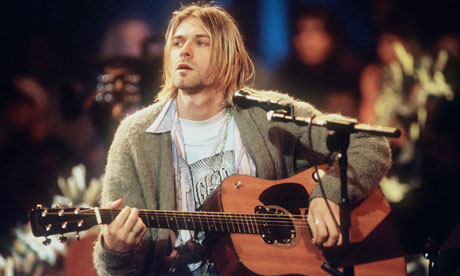 Kurt Cobain fronts Nirvana's MTV Unplugged concert in New York City in 1993. Photograph: Frank Micelotta/Getty Images
Kurt Cobain fronts Nirvana's MTV Unplugged concert in New York City in 1993. Photograph: Frank Micelotta/Getty ImagesIt seems Nirvana could have only happened then and there; a tight-knit community of local talent had been developing in Seattle for years, out of the spotlight where they had room to grow. Then a perfect storm combining record company budgets with expanding media outlets like MTV hit Seattle's musical shores, dragging more than a few bodies out to sea. Novoselic points out that, "We were the last musical phenomenon before online took hold. In 1999, Napster happened and nothing's been the same since. Now you have to pull people into the music, whereas before everything was pushed out toward the people. The playing field was levelled but now it's so vast that people have to work harder to be heard."
Wandering around the clubs to see what the Seattle kids are up to today, I was happy to find nothing sounded the least like Nirvana. There were the trance-like, Bolly-rock beats of Rose Windows, followed by Wayfinders, who sound like the thick, rich results of Uriah Heep combined with the Smashing Pumpkins. Later I happened upon Troy Nelson's band, the Young Evils, whose harmonies with Mackenzie Mercer are pop gems with an indie beat. Not once during these shows did the word grunge cross my mind. And yet they might not have been heard but for Nirvana. Nelson admits he moved to Seattle because Nirvana put it on the map, "and I'm still to this day trying to write a song as important as 'Smells Like Teen Spirit'."
"I think of it as a forest fire," says Sub Pop's Megan Jasper. "It just felt like everything went up in flames in Seattle so fast, but once it was out, time passed and there was new growth underneath. It makes room for people to come in and do new things. There was something about being in the shadows of grunge and Nirvana. There was a mindfulness because it was so close, and whatever you do, it needs to be different. I think enough time passed that it was OK to emerge and make things happen again. It's respect on one side and rebellion on the other.
"Most people in Seattle don't live in the past," Jasper continues. "Most people are more excited about the here and now. And thank god for that mindset otherwise this place would just be a ghost town." Though if you're into that kind of thing, there is a museum sitting in the shadow of downtown's Space Needle that's dedicated to preserving and sharing Seattle's musical legacy. It's the Experience Music Project, funded by Microsoft co-founder Paul Allen, and right now there's an exhibition running until April 2013 where all things Nirvana are on display. Called Nirvana: Taking Punk to the Masses, it's an ambitious collection of, according to the programme, "rare and unseen artefacts and photography from the band, their crews and families". Larry Reid, punk promoter and manager, says it feels a bit like they've "fetishised" the grunge scene, though, as Novoselic points out, it's better than seeing Cobain's guitar hanging off the wall at a Hard Rock Café while you're eating chilli fries.
I had pangs of déjà-vu as I stared into the glass case that held the sweater Cobain wore for the cover photo that accompanied my story inSpin; but I was heartened to see that one of the main attractions was a dry-erase board where museum-goers could connect any Seattle band, six-degrees-of-separation style, to Nirvana. The board was packed with the names of bands who appeared to be carrying on the very thing I'd imagine Cobain would have wanted if he'd had a chance to choose a legacy. Namely: We're all in this together, let's make some noise.
The Super Deluxe Edition of Nirvana's Nevermind will be releases on 19 September. The multi-format reissue is schedules for 26 September via Universal Music Enterprises featuring dozens of rare and previously unreleased performances
domingo, 4 de setembro de 2011
AS 10 MELHORES CAPAS DE ARTISTAS QUE MORRERAM COM VINTE E SETE ANOS.
Há dois meses Amy Jade Winehouse foi encontrada morta em seu apartamento. E isso nem foi surpresa. Todos já esperavam por este fim para a talentosa e pequena Amy. O que não achavam que aconteceria ainda este ano. Ela finalizava um novo disco e enfrentava problemas sérios com drogas, bebida e as vaias de seus fãs em apresentações desastrosas pelo mundo.
Amy tinha 27 anos completos, e sendo assim, temos mais uma vez reacesa a chama da Maldição dos Vinte e Sete!! Aaaaha ha haha (risada de Vincent Price). Pura coincidência? Teria Sra Winehouse abusado naquela noite sabendo que se desse merda, ok, isso seria aos 27 anos? Um quase suícidio?
Enfim, a cantora inglesa morreu com esta idade e isso não faz dela um mito. Longe disso. Muito talentosa, lançaria grandes discos. Só que Hendrix, Morrison, Joplin, Jones e Cobain contribuíram muito mais, fizeram mais história, e com a mesma idade. E até em condições piores, no que se diz respeito à drogas.
Inauguro assim, com essa “deixa” de Amy Winehouse, a minha primeira lista top 10 do DezCapas. Aqui estão, aqueles que morreram com vinte e sete anos e suas melhores capas. Comente, discorde, dê sugestões. Participe!..É divertido!
1º
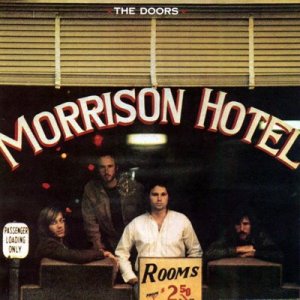
- Morrison Hotel – The Doors

Uma capa simples mas que ganha nos detalhes. A banda posada, o nome do hotel pintado no vidro, a persiana quase anunciando o encerramento do estabelecimento, um Jim Morrison com cara de gerente e algumas placas. Curiosamente uma dessas placas avisa que os quartos saem pelo preço de 2,50 a diária, seria bem sugestivo nos dias de hoje vender cada música do disco por este preço, via downloads de mp3.
2º

- Let it Bleed – Rolling Stones

Let it Bleed é o último disco com a participação de Brian Jones. Apenas duas músicas e nem como guitarrista. Expulso da banda, meses depois apareceu morto em sua casa boiando na piscina. Dizem que sua morte é um mistério, até existe uma fulana que garante que o culpado pela morte do músico foi justamente seu pai, que na época trabalhava como pedreiro na casa do Stone. Na capa de LiB, vários elementos: Um rolo de filme, uma pizza, um pneu, a face de um relógio e um bolo…todos juntos mais o vinil de Let it Bleed na vitrola dos (the) Rolling Stones. A obra é uma escultura de Robert Brownjohn. Obs.: Para escolher a capa dos Stones apenas os discos que Brian Jones participou, ou seja, de 1964 a 69.
3º

Cheap Thrills – Big Brother and the Holding Company
Último disco de Janis Joplin na banda Big Brother and the Holding Co. A ilustração é do genial cartunista Robert Crumb, em cada quadro um desenho para cada canção do disco.
4º

Beggars Banquet – The Rolling Stones
Mais uma dos Stones. Um banheiro público, daqueles que você encontra em beira de estrada, cheio de inscrições obscenas. Esta arte original só foi utilizada no relançamento em CD, já que na época havia sido proibida na Inglaterra e EUA. No caso do vinil, apenas uma capa branca com os dizeres RSVP (abreviatura de Responda por favor, utilizada em convites de casamento).
5º

Axis Bold as Love – Jimi Hendrix
Uma grande curiosidade sobre esta capa, Hendrix odiou!! O lendário guitarrista havia encomendado uma arte com índios americanos e o departamento de arte da gravadora entendeu Indianos!!! E ainda por cima, a arte é uma cópia da obra Viraat Purushan-Vishnuroopam. Pois bem, mas ficou bem bacana e se tornou uma das mais belas da história do rock. Sorry Jimi.
6º

Nevermind – Nirvana
Ok..ok.. Muitos dirão que esta deveria ser a grande campeã. Mas não, respeito aos mais velhos é bom e conserva os dentes. Claro que é muito criativa e aparece como uma provocação as bandas da época que corriam desesperadamente atrás do sucesso comercial. Méritos para a pilinha do bebê que chamou a atenção do mundo para os Nirvana. Claro que depois todos prestaram atenção nas músicas. A capa, que já se tornou clássica, foi refeita com o próprio garoto com 17 anos e Bart Simpsons repetiu a façanha numa homenagem da revista Rolling Stone.
7º

L.A. Woman – The Doors
A paleta de cores, a simplicidade do layout e uma fonte (tipo de letra) excessivamente usada em diversos discos de rock, vide Pet Sounds dos Beach Boys. Neste L.A. Woman, temos a banda como Doors e não The Doors.
8º

Pearl – Janis Joplin
Uma bela foto, Janis sentada numa poltrona estilo colonial e uma iluminação impecável. Na capa original temos apenas o título do disco, isso porque na época esse era um disco da Full Tilt Boogie Band, que Joplin cantava. Depois de sua morte o disco foi relançado com a mesma capa e desta vez com seu nome, Janis Joplin, abaixo da escrita Pearl.
9º

Back to Black – Amy Winehouse
Prestou atenção na capa da Janis Joplin? Você vê alguma semelhança entre elas? Pois bem, eu sim. As duas estão sentadas numa poltrona/cadeira. No plano de fundo, no canto direito, uma iluminação azulada. E até a letra (fonte) utilizada em Amy Winehouse é uma derivação da mesma usada na escrita Pearl. Seria uma homenagem?
10º

Are You Experienced – Jimi Hendrix
E finalmente no último lugar, não menos importante, nossa capa de Are You Experienced. Um dos discos mais importantes do rock de todos os tempos. A arte não tem nada de mais, é um exemplo daquilo que havia de mais comum na concepção de uma capa de rock. Talvez por isso o importante aqui é o conteúdo e não a embalagem.
Este foi o meu primeiro post para o DezCapas, espero que tenham gostado.
quinta-feira, 18 de agosto de 2011
Nirvana exhibition to be hosted in London
added: 18 Aug 2011 // by: newsdesk

It's to celebrate the twentieth anniversary of Nevermind's release fans are being called on to input.
The exhibition aims to "highlight the unique relationship the band enjoyed with their UK fans" and will feature professional photos, memorabilia and other treasured artifacts.
We're being called upon to add anything Nirvana related we have that we think should be a part of the exhibition by submitting a photo and description using a form on the website.
The exhibition will run for two weeks in September (exactly when TBC) at The Loading Bay Gallery in Brick Lane.
The super-special-deluxe edition of Nevermind - with CDs DVDs, B-sides, rarities etc - is out September 19.
The exhibition aims to "highlight the unique relationship the band enjoyed with their UK fans" and will feature professional photos, memorabilia and other treasured artifacts.
We're being called upon to add anything Nirvana related we have that we think should be a part of the exhibition by submitting a photo and description using a form on the website.
The exhibition will run for two weeks in September (exactly when TBC) at The Loading Bay Gallery in Brick Lane.
The super-special-deluxe edition of Nevermind - with CDs DVDs, B-sides, rarities etc - is out September 19.
quarta-feira, 25 de novembro de 2009
Portfolio Grunge

Nirvana, 1990. "This was the first day I had ever met Kurt [Cobain]," says Lavine of the photo session he took in his New York City apartment in 1990. "When they arrived, Kurt was asleep in the van. He was totally exhausted from touring. At that time, no one had any idea who Nirvana were" In the ensuing years, Lavine would become a trusted friend of the band: he was the one to suggest they take on cellist Melora Krieger as a touring member of the band for their final European tour in 1994.

Hole, 1991"Courtney [Love] was just a whirlwind," says Lavine. "She'd come in and talk very fast, she was moving all the time. And she was really, really smart. For this shoot, she was obsessed with Kurt. This was before Nevermind was released. She kept saying, 'Let me see the Kurt pictures, Let me see the Kurt pictures!' It was hard to keep up with her."
 Sonic Youth, 1988
Soundgarden, 1990. "That's a toy gun," says Lavine. "I just had props like this around the studio. Soundgarden were the funnest band to shoot because everyone was just so cool. They enjoyed the process. They came over and hung out, we got drunk, we took a lot of photos."
 The Smashing Pumpkins, 1991
Kurt Cobain and Courtney Love, 1992. "This picture has never been shown," says Lavine of an outtake for a Sassy magazine photo shoot from 1993. "There was a little drama with this shoot: we had to send the band the pictures so they could approve it. They were a little wacky, I don't know. I guess there was a lot of pressure on them and how they were to be perceived. This was the only session of them in the studio together. And they totally loved each other. They were all over each other. Kurt was really stoned that day."
 Pearl Jam, 1992
Dinosaur Jr., 1989
"We took this picture in J Mascis' mom's basement in 1989," says Lavine. "Those are romance novels behind the band; J's mother collects them. I remember I didn't get along with the band at all. J was awkward and difficult and you can see Lou [Barlow] has all his hair in his face. But sometimes you don't have to connect with your subject to make a great picture; sometimes being friendly with your subject just gets in the way."
sexta-feira, 6 de novembro de 2009
Nirvana ~ Live at Reading
 Certain concerts create a legend as soon as the final note ceases to ring. Nirvana's headlining appearance at the 1992 Reading Festival is one of these shows, a concert that arrived at precisely the right moment and stands as testament to a band at the peak of its powers...and right before things started to turn sour within the Nirvana camp. Despite the happy news of the birth of Frances Bean Cobain a mere 12 days before this August 30 festival, rumors swirled around Nirvana right up until the band hit the stage. Kurt Cobain took full advantage of these scurrilous stories, making his entrance in a hospital gown and wheelchair pushed by journalist Everett True. Cobain feebly reached for the microphone to croak out the opening lines of "The Rose," only to collapse onto the stage, milking the drama for a moment before leading Krist Novoselic and Dave Grohl through a ferocious "Breed." This impish sense of humor has been obscured over the years, lost under the weight of the band's tragic legacy, along with the fact that Nirvana could actually be fun as well as furious. Live at Reading brings all this roaring back. This is Nirvana's purest blast of rock & roll: there's a boundless, invigorating energy here and, just as importantly, there's a sense of joy to the performances, a joy that bubbles to the surface when Kurt laughs during the intro of "Sliver" but can be heard throughout the show, as the band rushes in tandem, pushing the tempos on "Aneurysm" and "Territorial Pissings," ebbing and flowing as one. Hints of this could be heard on the live comp From the Muddy Banks of the Wishkah, but this is a complete document of Nirvana in full flight and one of the greatest live rock & roll albums ever. [A CD/DVD edition was also released.]
 segunda-feira, 21 de setembro de 2009
How Nirvana's Bleach brightened up grunge

The band's first album combined the epic rock of Aerosmith with the gentle melodies of the Beatles to create a slow, stoned groove absent in later records.
I found the recent controversy over Kurt Cobain's avatar in Guitar Hero 5 incredibly uncanny. Why? For the past week, I had been listening to Bleach, Nirvana's debut album, in preparation for the forthcoming legacy reissue on Sub Pop. The sudden appearance of a pixelated Cobain singing Bon Jovi or Public Enemy tracks is certainly an unreal and psychedelic transition from their early days.
For myself, and many other Nirvana fans, Bleach is the key to getting the whole Nirvana experience. Recording began on Christmas Eve, 1988, with a budget of just over $600 (£370), which makes the album a triumph of rock'n'roll over economics. With limited time in the studio, what producer Jack Endino achieved – distilling Nirvana's live act on to record – is nothing short of fantastic.
It's been widely documented that Cobain improvised the Bleach lyrics on his way to the studio, and the words lack the lyrical complexities explored on further Nirvana releases. However, the impromptu nature of the lyrics caught the nihilism of Cobain's life in Aberdeen, Washington. Bleach's spontaneity captures the boredom of life as a beautiful loser in a small town.
Bleach could be the best Nirvana album. While Nevermind was built on huge, powerful riffs and big pop songs (an agenda Cobain was keen on), Bleach is a slow, stoned groove, reminiscent of Black Flag's My War. The guitar dirges almost threatened to overcome the record, yet within the punk rock and grunge howls, are the embryonic stages of stadium-sized Nirvana.
The budget production of Bleach set a template for Nirvana and, after the release of the highly-produced Nevermind, Cobain often referenced Bleach's back-to-basics approach (an approach that informed their post-Nevermind record, In Utero.) If Cobain had survived fame, I think he would have gone on to make stripped-down records similar to Johnny Cash's American series.
I'd hesitate to say Bleach was "of its time", because no matter what year Nirvana released it, they would have made a relatively big pop culture impact. People will always get, recognise and love Cobain's songwriting. And, strangely enough, the DIY economies and heavy grunge of Bleach would fit in perfectly with similar contemporary bands around now such as Meth Teeth, Wavves, Pens, Mazes and Male Bonding.
Put simply, the songwriting craft of Bleach has not dated. Not all is grunge: Bleach contains traces of the Sturm und Drang sludge of Sabbath, the cinematic swipes of the Wipers, the epic rock of Aerosmith and the melodies of the Beatles.
Though finished in late '88, it took Sub Pop over a year to find the financing to release Bleach. And now, 20 years later, they are releasing it again. It's a classic record. And after all the fuss over Guitar Hero, I can't wait for something that will shine a light on a much cooler entry in the Nirvana musical canon.
For myself, and many other Nirvana fans, Bleach is the key to getting the whole Nirvana experience. Recording began on Christmas Eve, 1988, with a budget of just over $600 (£370), which makes the album a triumph of rock'n'roll over economics. With limited time in the studio, what producer Jack Endino achieved – distilling Nirvana's live act on to record – is nothing short of fantastic.
It's been widely documented that Cobain improvised the Bleach lyrics on his way to the studio, and the words lack the lyrical complexities explored on further Nirvana releases. However, the impromptu nature of the lyrics caught the nihilism of Cobain's life in Aberdeen, Washington. Bleach's spontaneity captures the boredom of life as a beautiful loser in a small town.
Bleach could be the best Nirvana album. While Nevermind was built on huge, powerful riffs and big pop songs (an agenda Cobain was keen on), Bleach is a slow, stoned groove, reminiscent of Black Flag's My War. The guitar dirges almost threatened to overcome the record, yet within the punk rock and grunge howls, are the embryonic stages of stadium-sized Nirvana.
The budget production of Bleach set a template for Nirvana and, after the release of the highly-produced Nevermind, Cobain often referenced Bleach's back-to-basics approach (an approach that informed their post-Nevermind record, In Utero.) If Cobain had survived fame, I think he would have gone on to make stripped-down records similar to Johnny Cash's American series.
I'd hesitate to say Bleach was "of its time", because no matter what year Nirvana released it, they would have made a relatively big pop culture impact. People will always get, recognise and love Cobain's songwriting. And, strangely enough, the DIY economies and heavy grunge of Bleach would fit in perfectly with similar contemporary bands around now such as Meth Teeth, Wavves, Pens, Mazes and Male Bonding.
Put simply, the songwriting craft of Bleach has not dated. Not all is grunge: Bleach contains traces of the Sturm und Drang sludge of Sabbath, the cinematic swipes of the Wipers, the epic rock of Aerosmith and the melodies of the Beatles.
Though finished in late '88, it took Sub Pop over a year to find the financing to release Bleach. And now, 20 years later, they are releasing it again. It's a classic record. And after all the fuss over Guitar Hero, I can't wait for something that will shine a light on a much cooler entry in the Nirvana musical canon.
terça-feira, 8 de setembro de 2009
Universal lançará concerto inédito dos Nirvana

O lendário, e, até o momento, inédito, concerto dos Nirvana no festival britânico de Reading, em 1992, será editado para CD e DVD e lançado pela Universal no dia 3 de Novembro.
A multinacional informou hoje que "Nirvava Live at Reading" ficou com a primeira posição do ranking da revista "Kerrang" dos "100 concertos que emocionaram o mundo".
O show foi realizado no dia 30 de Agosto de 1992, como principal atracção do festival britânico de Reading.
Apesar de haver cópias piratas da apresentação, a Universal lançará um DVD com o concerto completo, extraído da filmagem original, com a cor melhorada e o som original, segundo a companhia.
"Nirvana Live At Reading" será lançado em uma versão especial, em compacto mais DVD, além de DVD e CD separadamente, no dia 3 de Novembro, seguida por um LP duplo, que poderá ser comprado a partir do dia 17 de Novembro.
Embora o concerto tenha quase todas as faixas do álbum "Nevermind", os Nirvana também apresentaram músicas então inéditas, como "All Apologies" e "Dumb", que depois foram incluídas no disco "In Utero" e a primeira interpretação em público de "Tourette's".
A lista do repertório do concerto também inclui músicas do inicio da carreira do grupo, do seu álbum de estreia, "Bleach", como "Blew", "About A Girl", "School", "Negative Creep" e o primeiro single do Nirvana, "Love Buzz", sem esquecer os clássicos "Come As You Are", "Lithium", "Polly" e "Smells Like Teen Spirit", entre outros.
sexta-feira, 4 de setembro de 2009
Nirvana 'Live At Reading Festival' DVD finally set for official release
 An official DVD and CD release of Nirvana's seminal performance at the Reading Festival in 1992 is set for release on November 2.The package features footage of the performance, which took place on August 30, 1992 and is considered by many to be one of the greatest performances ever at the festival. The CD version of the performance features the setlist (below) minus 'Love Buzz'.CD-only and DVD-only versions of the release will be issued on the same day as the DVD package, while a double 12-inch vinyl version will come out on November 16.The package will be the first official release of the gig, although an unofficial DVD of the performance, entitled 'Life Takes No Prisoners', was released last May.The setlist for 'Nirvana Live At Reading' is:'Breed''Drain You''Aneurysm''School''Sliver''In Bloom''Come As You Are''Lithium''About A Girl''Tourette's''Polly''Lounge Act''Smells Like Teen Spirit''On A Plain''Negative Creep''Been A Son''All Apologies''Blew''Dumb''Stay Away''Spank Thru''Love Buzz''The Money Will Roll Right In''D-7''Territorial Pissings'
segunda-feira, 17 de agosto de 2009
Bleach dos Nirvana é relançado com extras

A nova edição irá incluir as versões remasterizadas, uma apresentação ao vivo e fotos inéditas
O lançamento do primeiro álbum dos Nirvana, Bleach, completou 20 anos em Junho. Para comemorar a data, o selo Sub Pop, responsável por seu lançamento, irá devolver o trabalho às lojas em uma versão especial cheia de extras.
A nova edição de Bleach irá incluir as versões remasterizadas das canções, uma apresentação ao vivo nunca lançada e fotos inéditas da banda. O concerto registra a banda em Portland em Fevereiro de 1990 e tem 11 músicas.
O relançamento chegará às lojas dos Estados Unidos dia 03 de novembro em dois formatos: um único CD e em vinil duplo.
Fica aqui Negative Creep numa versão que considero uma pérola, ensaios iniciais da banda...
domingo, 19 de abril de 2009
Kurt 15 anos depois
 Foi há 15 anos, dia 5 de Abril de 1994. (..)O maior ícone do rock da sua geração morria, aparentemente, por suicídio, aos 27 anos de idade, engrossando o mítico "Clube 27" (os músicos que morreram com 27 anos). Os Nirvana tinham dado um dos seus últimos concertos em Portugal, no Dramático de Cascais, escassos dois meses antes da tragédia acontecer.
(..)Com o inesperado êxito (comercial e crítico) de "Nevermind" e do hino "Smells Like Teen Spirit", Kurt Cobain rapidamente passou de figura de culto quase desconhecida para figura de dimensão mediática no mundo da música, epíteto que sempre recusou. Aliás, a fama sempre lhe trouxe dissabores, como se fosse uma força de bloqueio à sua criatividade e felicidade. Consta-se que foi por lidar mal com a exposição pública que Cobain se afundou, cada vez mais, num abismo de drogas e álcool, culminando no acto suicida. Esse último período soturno de total fragilidade psicológica e emocional, de deriva angustiada e depressiva do vocalista dos Nirvana, está bem retratado no filme "Last Days" (2005) de Gus Van Sant (ainda que não seja explícita a relação entre a personagem do filme e Kurt Cobain).
Com a morte, há 15 anos, de Kurt Cobain morria também a lenda maior da música grunge e uma das maiores referências do rock dos anos 90. A mãe do cantor que cantava - "I hate myself and I want to die" - sempre pressentiu o desenlace fatal quando, após a notícia da morte do filho, desabafou para os jornais: "Sempre lhe disse que não se juntasse ao maldito clube dos 27!"
O jornal espanhol ABC publicou um resumo da vida e obra de Kurt Cobain num "A a Z".
Publicada por Victor Afonso http://ohomemquesabiademasiado.blogspot.com/2009/04/kurt-cobain-15-anos-depois.html
terça-feira, 17 de março de 2009
Nirvana ~ fim dos inéditos
.jpg) Já não existem mais inéditos dos Nirvana por editar. Quem o diz é o ex-baixista da banda, Krist Novoselic. «Não há mais inéditos dos Nirvana. Já não vai haver mais nenhum disco. Apenas existe vídeo. Muito vídeo», comentou Novoselic numa entrevista para agrupar a história do grupo, com vista ao arquivo pelo Washington State's Legacy Project.Na mesma conversa, o baixista não especificou o conteúdo dos vídeos nem se há algum plano para vir a comercializá-los, mas aproveitou para dizer que reatou as boas relações com Courtney Love, a viúva de Kurt Cobain. Recorde-se que no início do século, Novoselic e Dave Grohl (ex-baterista) entraram em conflito com Love sobre a melhor maneira de editar o último inédito dos Nirvana a ser mostrado até agora, 'You Know You're Right'. A canção acabou por integrar a compilação de 2002, "Nirvana" e a edição de luxo "With The Lights Out", de 2004. As entrevistas ao ex-músico e agora activista político, resultaram em 89 páginas com transcrições, nas quais Novoselic discorre sobre a sua infância e início da banda, bem como o seu arrependimento por não ter feito mais para evitar a morte de Kurt Cobain em 1994, músico a quem chama de «génio». «Existe sempre algum rancor. Algum arrependimento. Eu estava zangado na altura. Foi um desperdício. Vocês sabem, foram as drogas. Foi terrível. O Kurt ligou-me no dia em que experimentou pela primeira vez heroína, para dizer que o tinha feito. Eu disse-lhe 'Não faças isso. Estás a brincar com o fogo'», disse Novoselic.
Já não existem mais inéditos dos Nirvana por editar. Quem o diz é o ex-baixista da banda, Krist Novoselic. «Não há mais inéditos dos Nirvana. Já não vai haver mais nenhum disco. Apenas existe vídeo. Muito vídeo», comentou Novoselic numa entrevista para agrupar a história do grupo, com vista ao arquivo pelo Washington State's Legacy Project.Na mesma conversa, o baixista não especificou o conteúdo dos vídeos nem se há algum plano para vir a comercializá-los, mas aproveitou para dizer que reatou as boas relações com Courtney Love, a viúva de Kurt Cobain. Recorde-se que no início do século, Novoselic e Dave Grohl (ex-baterista) entraram em conflito com Love sobre a melhor maneira de editar o último inédito dos Nirvana a ser mostrado até agora, 'You Know You're Right'. A canção acabou por integrar a compilação de 2002, "Nirvana" e a edição de luxo "With The Lights Out", de 2004. As entrevistas ao ex-músico e agora activista político, resultaram em 89 páginas com transcrições, nas quais Novoselic discorre sobre a sua infância e início da banda, bem como o seu arrependimento por não ter feito mais para evitar a morte de Kurt Cobain em 1994, músico a quem chama de «génio». «Existe sempre algum rancor. Algum arrependimento. Eu estava zangado na altura. Foi um desperdício. Vocês sabem, foram as drogas. Foi terrível. O Kurt ligou-me no dia em que experimentou pela primeira vez heroína, para dizer que o tinha feito. Eu disse-lhe 'Não faças isso. Estás a brincar com o fogo'», disse Novoselic.quarta-feira, 25 de julho de 2007
Subscrever:
Mensagens (Atom)