quarta-feira, 25 de abril de 2007

Janis Joplin - She means freedom...


::Some words about her::
The greatest white female rock singer of the 1960s, Janis Joplin was also a great blues singer, making her material her own with her wailing, raspy, supercharged emotional delivery. First rising to stardom as the frontwoman for San Francisco psychedelic band Big Brother & the Holding Company, she left the group in the late '60s for a brief and uneven (though commercially successful) career as a solo artist. Although she wasn't always supplied with the best material or most sympathetic musicians, her best recordings, with both Big Brother and on her own, are some of the most exciting performances of her era. She also did much to redefine the role of women in rock with her assertive, sexually forthright persona and raunchy, electrifying on-stage presence. Joplin was raised in the small town of Port Arthur, TX, and much of her subsequent personal difficulties and unhappiness has been attributed to her inability to fit in with the expectations of the conservative community. She'd been singing blues and folk music since her teens, playing on occasion in the mid-'60s with future Jefferson Airplane guitarist Jorma Kaukonen. There are a few live pre-Big Brother recordings (not issued until after her death), reflecting the inspiration of early blues singers like Bessie Smith, that demonstrate she was well on her way to developing a personal style before hooking up with the band. She had already been to California before moving there permanently in 1966, when she joined a struggling early San Francisco psychedelic group, Big Brother & the Holding Company. Although their loose, occasionally sloppy brand of bluesy psychedelia had some charm, there can be no doubt that Joplin — who initially didn't even sing lead on all of the material — was primarily responsible for lifting them out of the ranks of the ordinary. She made them a hit at the 1967 Monterey Pop Festival, where her stunning version of "Ball and Chain" (perhaps her very best performance) was captured on film. After a debut on the Mainstream label, Big Brother signed a management deal with Albert Grossman and moved on to Columbia. Their second album, Cheap Thrills, topped the charts in 1968, but Joplin left the band shortly afterward, enticed by the prospects of stardom as a solo act. Joplin's first album, I Got Dem Ol' Kozmic Blues Again Mama!, was recorded with the Kozmic Blues Band, a unit that included horns and retained just one of the musicians that had played with her in Big Brother (guitarist Sam Andrew). Although it was a hit, it wasn't her best work; the new band, though more polished musically, was not nearly as sympathetic accompanists as Big Brother, purveying a soul-rock groove that could sound forced. That's not to say it was totally unsuccessful, boasting one of her signature tunes in "Try (Just a Little Bit Harder)." For years, Joplin's life had been a roller coaster of drug addiction, alcoholism, and volatile personal relationships, documented in several biographies. Musically, however, things were on the upswing shortly before her death, as she assembled a better, more versatile backing outfit, the Full Tilt Boogie Band, for her final album, Pearl (ably produced by Paul Rothchild). Joplin was sometimes criticized for screeching at the expense of subtlety, but Pearl was solid evidence of her growth as a mature, diverse stylist who could handle blues, soul, and folk-rock. "Mercedes Benz," "Get It While You Can," and Kris Kristofferson's "Me and Bobby McGee" are some of her very best tracks. Tragically, she died before the album's release, overdosing on heroin in a Hollywood hotel in October 1970. "Me and Bobby McGee" became a posthumous number one single in 1971, and thus the song with which she is most frequently identified.
by Richie Unterberger ::allmusic::


::Here´s my favourite song::


Janis Joplin - Summertime (Live Gröna Lund 1969)


mojorising

Arcade Fire :: No cars Go

Recomendo o novo álbum NEON BIBLE
mojorising

domingo, 8 de outubro de 2006

The beauty regime ( Divine Comedy)


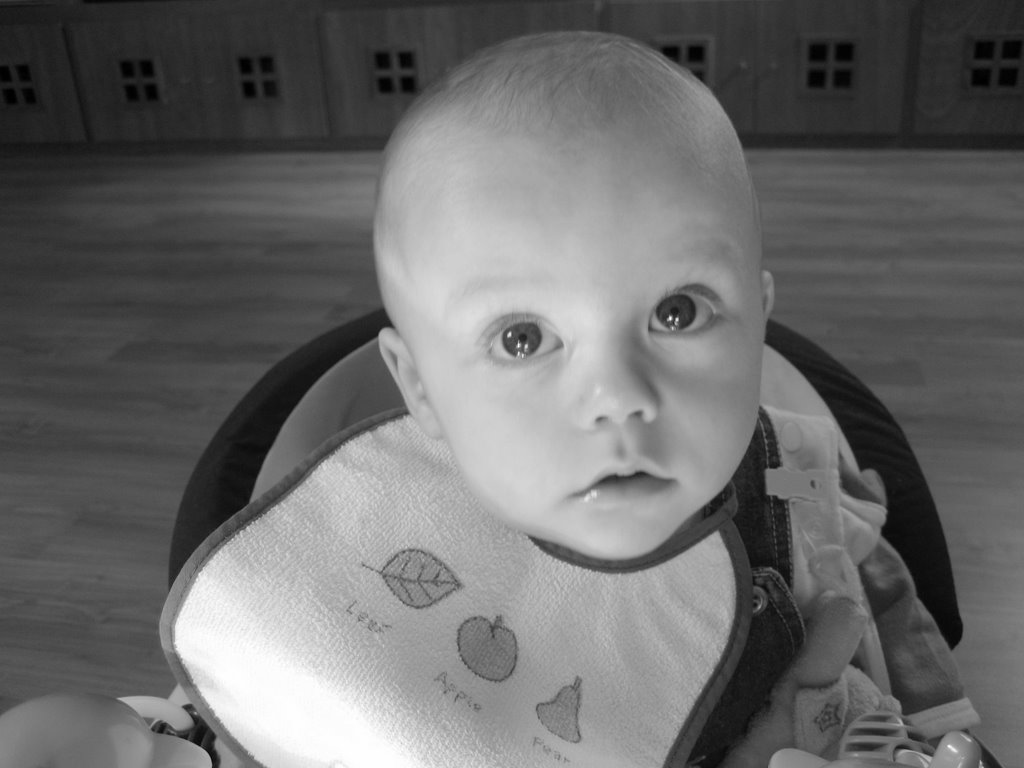
the most beautiful boy
in the world...


my son


Beat stress and rebalance your life
Make those dreams come true
Impress all your colleagues and friends
With the brand new you
So many lives condemned for no need '
Cause people don't buy the right magazine
Take a look in the mirror and see
Exactly how worthless you are

In a rut?
Can't get out? Don't know why?
It's time to make that change
Cover up all the pain in your life
With our new product range
So please don't feel blue - let us show you how
To talk yourself into a good mood right now
Feeling sad is no longer allowed
No matter how worthless you are
And if your life depresses you
Just live it through your favourite movie star
Beat stress and rebalance your life
All you need to do Is forget all the useless advice
And live your life for you
Don't let them sell you impossible dreams
Don't be a slave to the beauty regime
Look again in the mirror and see
Exactly how perfect you are

mojorising

terça-feira, 28 de março de 2006

The dark side...


Joy Division

Formed in the wake of the punk explosion in England, Joy Division became the first band in the post-punk movement by later emphasizing not anger and energy but mood and expression, pointing ahead to the rise of melancholy alternative music in the '80s. Though the group's raw initial sides fit the bill for any punk band, Joy Division later incorporated synthesizers (taboo in the low-tech world of '70s punk) and more haunting melodies, emphasized by the isolated, tortured lyrics of its lead vocalist,
Ian Curtis. While the British punk movement shocked the world during the late '70s, Joy Division's quiet storm of musical restraint and emotive power proved to be just as important to independent music in the 1980s.
The band was founded in early 1977, soon after
the Sex Pistols had made their first appearance in Manchester. Guitarist Bernard Albrecht (b. Bernard Dicken, January 4, 1956) and bassist Peter Hook (b. February 13, 1956) had met while at the show and later formed a band called the Stiff Kittens; after placing an ad through a Manchester record store, they added vocalist Ian Curtis (b. July 15, 1956) and drummer Steve Brotherdale. Renamed Warsaw (from David Bowie's "Warszawa"), the band made its live debut the following May, supporting the Buzzcocks and Penetration at Manchester's Electric Circus. After the recording of several demos, Brotherdale quit the group in August 1977, prompting the hire of Stephen Morris (b. October 28, 1957). A name change to Joy Division in late 1977 — necessitated by the punk band Warsaw Pakt — was inspired by Karol Cetinsky's World War II novel The House of Dolls. (In the book, the term "joy division" was used as slang for concentration camp units wherein female inmates were forced to prostitute themselves for the enjoyment of Nazi soldiers.)
Playing frequently in the north country during early 1978, the quartet gained the respect of several influential figures:
Rob Gretton, a Manchester club DJ who became the group's manager; Tony Wilson, a TV/print journalist and owner of the Factory Records label; and Derek Branwood, a record executive with RCA Northwest, who recorded sessions in May 1978, for what was planned to be Joy Division's self-titled debut LP. Though several songs bounded with punk energy, the rest of the album showed at an early age the band's later trademarks: Curtis' themes of post-industrial restlessness and emotional despair, Hook's droning bass lines, and the jagged guitar riffs of Albrecht.
The album should have been hailed as a punk classic, but when a studio engineer added synthesizers to several tracks — believing that the punk movement had to move on and embrace new sounds — Joy Division scrapped the entire LP. (Titled
Warsaw for a 1982 bootleg, the album was finally given wide issue ten years later.) The first actual Joy Division release came in June 1978, when the initial mid-1977 demos were released as the EP An Ideal for Living, on the band's own Enigma label. Early in 1979, the buzz surrounding Joy Division increased with a session recorded for John Peel's BBC radio show.
The group began recording with producer
Martin Hannett and released Unknown Pleasures on old friend Tony Wilson's Factory label in July 1979. The album enjoyed immense critical acclaim and a long stay on the U.K.'s independent charts. Encouraged by the punk buzz, the American Warner Bros. label offered a large distribution contract that fall. The band ignored it but did record another radio session for John Peel on November 26th. (Both sessions were later collected on the Peel Sessions album.)
During late 1979, Joy Division's manic live show gained many converts, partly due to rumors of
Curtis' ill health. An epilepsy sufferer, he was prone to breakdowns and seizures while on stage — it soon grew difficult to distinguish the fits from his usual on-stage jerkiness and manic behavior. As the live dates continued and the new decade approached, Curtis grew weaker and more prone to seizures. After a short rest over the Christmas holiday, Joy Division embarked on a European tour during January, though several dates were cancelled because of Curtis. The group began recording its second LP after the tour ended (again with Hannett), and released "Love Will Tear Us Apart" in April. The single was again praised but failed to move beyond the independent charts. After one gig in early May, the members of Joy Division were given two weeks of rest before beginning the group's first U.S. tour. Two days before the scheduled flight, however, Curtis was found dead in his home, the victim of a self-inflicted hanging.
Before
Curtis' death, the band had agreed that Joy Division would cease to exist if any member left, for any reason. Ironically though, the summer of 1980 proved to be the blooming of the band's commercial status, when a re-release of "Love Will Tear Us Apart" rose to number 13 on the British singles chart. In August, the release of Closer finally united critics' positivity with glowing sales, as the album peaked at number six. Before the end of the summer, Unknown Pleasures was charting as well.
By January of the following year,
Hook, Morris, and Albrecht (now Bernard Sumner) had formed New Order, with Sumner taking over vocal duties. Also in 1981, the posthumous release of Still — including two sides of rare tracks and two of live songs — rose to number five on the British charts. As New Order's star began to shine during the '80s, the group had trouble escaping the long shadow of Curtis and Joy Division. "Love Will Tear Us Apart" charted for the third time in 1983, and 1988 also proved a big year for the defunct band: the reissued single "Atmosphere" hit number 34 and a double-album compilation entitled Substance reached number seven in the album charts. Seven years later, the 15th anniversary of Curtis' death was memorialized with a new JD compilation (Permanent: Joy Division 1995), a tribute album (A Means to an End), and a biography of his life (Touching From a Distance) written by his widow, Deborah Curtis. In 1999, the Factory label began a program of concert-performance reissues — all overseen by the remainder of the original lineup — with Preston Warehouse 28 February 1980.
mojorising

sábado, 29 de outubro de 2005

crazy movie

Posted by Picasa


Taglines for
The Shining (1980)
The tide of terror that swept America IS HERE

A Masterpiece Of Modern Horror

All work and no play make Jack a dull boy...

Stanley Kubrick's epic nightmare of horror

The Horror is driving him crazy

He Came As The Caretaker, But This Hotel Had Its Own Guardians - Who'd Been There A Long Time

segunda-feira, 24 de outubro de 2005

Another one for my Top 10


eArcade Fire are not an emo band. Fronted by the husband-and-wife team of Win Butler and Régine Chassagne, the group's emotional assault — rendered even more poignant by the dedications to recently departed family members contained in the liner notes — is brave, empowering, and dusted with something that many of that genre's angst-fueled acts desperately lack: an element of danger. Funeral' s mourners — specifically Butler and Chassagne — inhabit the same post-apocalyptic world as London Suede's Dog Man Star; they are broken, beaten, and ferociously romantic, reveling in the brutal beauty of their surroundings like a heathen Adam & Eve. "Neighborhood #1 (Tunnels)," the first of four metaphorical forays into the geography of the soul, follows a pair of young lovers who meet in the middle of the town through tunnels that connect to their bedrooms. Over a soaring piano lead that's effectively doubled by distorted guitar, they reach a Lord of the Flies-tinged utopia where they can't even remember their names or the faces of their weeping parents. Butler sings like Radiohead's Jonny Greenwood used to play, like a lion-tamer whose whip grows shorter with each and every lash. He can barely contain himself, and when he lets loose it's both melodic and primal, like Berlin-era Bowie or British Sea Power. "Neighborhood #2 (Laïka)" examines suicidal desperation through an angular Gang of Four prism; the hypnotic wash of strings and subtle meter changes of "Neighborhood #4 (7 Kettles)" winsomely capture the mundane doings of day-to-day existence; and "Neighborhood #3 (Power Out)," Funeral's victorious soul-thumping core, is a goose bump-inducing rallying cry centered around the notion that "the power's out in the heart of man, take it from your heart and put it in your hand." The Arcade Fire are not bereft of whimsy. "Crown of Love" is like a wedding cake dropped in slow motion, utilizing a Johnny Mandel-style string section and a sweet, soda-pop stand chorus to provide solace to a jilted lover yearning for a way back into the fold, and "Haiti" relies on a sunny island melody to explore the complexities of Chassagne's mercurial homeland. However, it's the sheer power and scope of cuts like "Wake Up" — featuring all 15 musicians singing in unison — and the mesmerizing, early-Roxy Music pulse of "Rebellion (Lies)" that make Funeral the remarkable achievement that it is. These are songs that pump blood back into the heart as fast and furiously as it's draining from the sleeve on which it beats, and by the time Chassagne dissects her love of riding "In the Backseat" with the radio on, despite her desperate fear of driving, Funeral's singular thread is finally revealed; love does conquer all, especially love for the cathartic power of music.Th

segunda-feira, 6 de junho de 2005

sexta-feira, 29 de abril de 2005

Very good to end here...

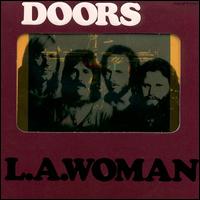
L.A.W. Posted by Hello

The final album with Jim Morrison in the lineup is by far their most blues-oriented, and the singer's poetic ardor is undiminished, though his voice sounds increasingly worn and craggy on some numbers. Actually, some of the straight blues items sound kind of turgid, but that's more than made up for by several cuts that rate among their finest and most disturbing work. The seven-minute title track was a car-cruising classic that celebrated both the glamour and seediness of Los Angeles; the other long cut, the brooding, jazzy "Riders on the Storm," was the group at its most melodic and ominous. It and the far bouncier "Love Her Madly" were hit singles, and "The Changeling" and "L'America" count as some of their better little-heeded album tracks. An uneven but worthy finale from the original quartet.

The Lizard was on the limbo

M.H. Posted by Hello

The Doors returned to crunching, straightforward hard rock on an album that, despite yielding no major hit singles, returned them to critical favor with hip listeners. An increasingly bluesy flavor began to color the songwriting and arrangements, especially on the party and booze anthem "Roadhouse Blues." Airy mysticism was still present on "Waiting for the Sun," "Queen of the Highway," and "Indian Summer"; "Ship of Fools" and "Land Ho!" struck effective balances between the hard rock arrangements and the narrative reach of the lyrics. "Peace Frog" was the most political and controversial track, documenting the domestic unrest of late-'60s America before unexpectedly segueing into the restful ballad "Blue Sunday." "The Spy," by contrast, was a slow blues that pointed to the direction that would fully blossom on L.A. Woman.

The best live album of all times... just listen

While this double disc (later combined with Alive, She Cried and Live at the Hollywood Bowl for CD release under the title In Concert) is valuable in that it contains material the Doors didn't release on their studio albums, it's also tilted toward some of their more boorish aspects. Recorded at concerts in 1969 and 1970, this was an era in which Jim Morrison was becoming increasingly dissolute and increasingly disinterested in the whole rock machine. During much of this set, he seems not to be taking himself or the songs too seriously, tossing flippant asides to the audience that seem to treat the whole exercise as a charade. As for the music, the haunting "Universal Mind" and the basic blues-rocker "Build Me a Woman" are originals that are not found on their proper albums; "Close to You" is a dull Muddy Waters cover sung by Ray Manzarek; "Who Do You Love" is a fair cover of the Bo Diddley standard; and the controversial "The Celebration of the Lizard" is a drawn-out opus that is as much poetry recitation as music. There are also extended versions of "Soul Kitchen," "Break On Through," and "When the Music's Over" that flag considerably in comparison to the sleeker studio versions. A.L. Posted by Hello

sábado, 26 de fevereiro de 2005

tsp Posted by Hello

The weakest studio album recorded with Jim Morrison in the group, partially because their experiments with brass and strings on about half the tracks weren't entirely successful. More to the point, though, this was their weakest set of material, low lights including filler like "Do It" and "Runnin' Blue," a strange bluegrass-soul blend that was a small hit. On the other hand, about half the record is quite good, especially the huge hit "Touch Me" (their most successful integration of orchestration), the vicious hard rock riffs of "Wild Child," the overlooked "Shaman's Blues," and the lengthy title track, a multi-part suite that was one of the band's best attempts to mix rock with poetry. "Tell All the People" and "Wishful Sinful," both penned by Robbie Krieger, were uncharacteristically wistful tunes that became small hits but were not all that good, and not sung very convincingly by Morrison.

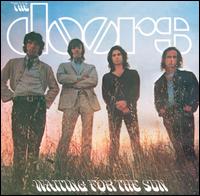
waiting for the sun...

Posted by Hello

The Doors' 1967 albums had raised expectations so high that their third effort was greeted as a major disappointment. With a few exceptions, the material was much mellower, and while this yielded some fine melodic ballad rock in "Love Street," "Wintertime Love," "Summer's Almost Gone," and "Yes, the River Knows," there was no denying that the songwriting was not as impressive as it had been on the first two records. On the other hand, there were first-rate tunes such as the spooky "The Unknown Soldier," with antiwar lyrics as uncompromisingly forceful as anything the band did, and the compulsively riff-driven "Hello, I Love You," which nonetheless bore an uncomfortably close resemblance to the Kinks' "All Day and All of the Night." The flamenco guitar of "Spanish Caravan," the all-out weirdness of "Not to Touch the Earth" (which was a snippet of a legendary abandoned opus, "The Celebration of the Lizard"), and the menacing closer "Five to One" were also interesting. In fact, time's been fairly kind to the record, which is quite enjoyable and diverse, just not as powerful a full-length statement as the group's best albums.
"The Unknown Soldier"

sábado, 22 de janeiro de 2005

Now in Portuguese...

Vou aproveitar este sítio para opinar sobre albuns de música, recentes e se me apetecer old ones...

Se tiverem comentários a fazer ou desejarem ver algum album comentado... deixem o vosso pedido.


mojorising

quinta-feira, 20 de janeiro de 2005

fucking strange... fucking good...


strange.days Posted by Hello
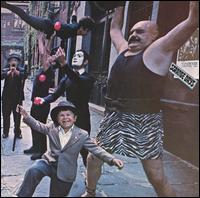
Many of the songs on Strange Days had been written around the same time as the ones that appeared on The Doors, and with hindsight one has the sense that the best of the batch had already been cherry picked for the debut album. For that reason, the band's second effort isn't as consistently stunning as their debut, though overall it's a very successful continuation of the themes of their classic album. Besides the hit "Strange Days," highlights included the funky "Moonlight Drive," the eerie "You're Lost Little Girl," and the jerkily rhythmic "Love Me Two Times," which gave the band a small chart single. "My Eyes Have Seen You" and "I Can't See Your Face in My Mind" are minor but pleasing entries in the group's repertoire that share a subdued Eastern psychedelic air. The 11-minute "When the Music's Over" would often be featured as a live showstopper, yet it also illustrated their tendency to occasionally slip into drawn-out bombast.

quarta-feira, 19 de janeiro de 2005

the first post...the first album

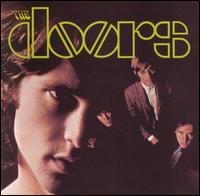
A tremendous debut album, and indeed one of the best first-time outings in rock history, introducing the band's fusion of rock, blues, classical, jazz, and poetry with a knockout punch. The lean, spidery guitar and organ riffs interweave with a hypnotic menace, providing a seductive backdrop for Jim Morrison's captivating vocals and probing prose. "Light My Fire" was the cut that topped the charts and established the group as stars, but most of the rest of the album is just as impressive, including some of their best songs: the propulsive "Break On Through" (their first single), the beguiling Oriental mystery of "The Crystal Ship," the mysterious "End of the Night," "Take It as It Comes" (one of several tunes besides "Light My Fire" that also had hit potential), and the stomping rock of "Soul Kitchen" and "Twentieth Century Fox." The 11-minute Oedipal drama "The End" was the group at its most daring and, some would contend, overambitious. It was nonetheless a haunting cap to an album whose nonstop melodicism and dynamic tension would never be equaled by the group again, let alone bettered.

The End is really song that never end.


">

the purpose

of this blog is to write about music, literature, life and death!

me Posted by Hello